Agam Kuan
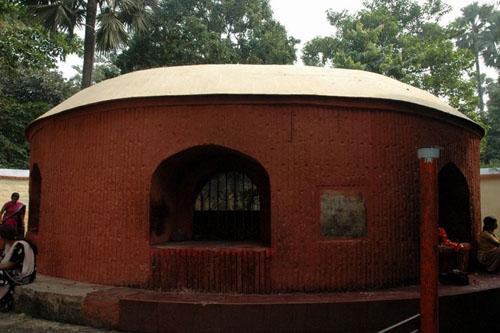
Ashoka constructed the infamous well, Agam Kuan in order to torment people and make them suffer. Tales about this torture can be found in the documents written by the Chinese travelers, especially during the 5th and 7th centuries A.D. The depth of the well is 105 feet. The shape of the well is circular in structure, with a diameter of 20 feet and 2 inches.
The upper portion of the well is enclosed with bricks, that is, till a height of about 44 inches. After the length of 44 inches, the well is held in place with the help of a number of rings, made up of wood. Eight numbers of windows, arched in shape, are there on the plane, which conceals the opening of the well. These arched windows impart a unique characteristic to the well.
According to another mythological story, after murdering his brothers, as many as 99, Ashoka tossed them into the well, in order to gain the absolute power in the Mauriyan Empire.
Numerous other Jain mythological tales are linked to this location. One of these numerous tales is the one which says that Chand, a king, tossed Sudarshana into the well. Sudarshana was known to be a Jain monk. Later Sudarshana was found to be drifting on the surface of the water and was seen in a sitting position on top of a lotus flower.
This well functions as a location for the different and numerous rituals, mainly belonging to the Hindu religion. This well is believed to be a holy place.
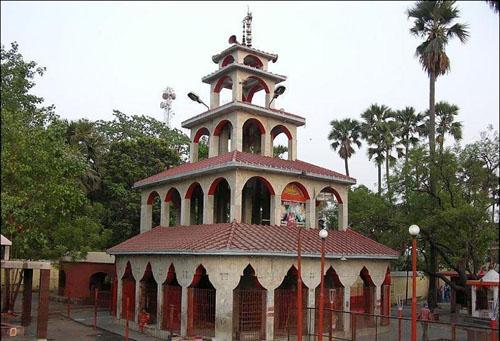
The Shitala Devi Temple is situated adjacent to the Agam Kaun. This temple has been built in the name of Shitala Devi. The pindas of the “Saptamatrikas” are present in the temple. The word “Saptamatrikas” means the seven mother goddesses. Followers from all over the country come here, since the temple is highly respected and valued for healing ailments such as smallpox and chicken pox.
Numerous sculptures belonging to the archaic time period, especially to the medieval period, are discovered from this location. During the year 1879-1880, A.Cunningham came to this location. He mentioned one of the important pieces, which was found in this location. The piece was the Yaksha of the Mauriyan art-affiliation. The well named Agam Kuan was discovered by the famous British explorer named Laurence Waddell during the time of 1890s. He stumbled upon this historic well, when he was surveying the relics of Pataliputra.
HOW TO REACH AGAM KUAN
By road: One can reach this place via cycle rickshaws, auto rickshaws, private cabs or regular buses.
By rail: Agam Kuan is situated at a distance of 6.6 Kms from the Patna Railway junction, in the east direction.
By air: The nearest airport is the Patna Airport, which is located at a distance of 11 Kms.