Rohtasgarh Fort
The district of Rohtas contains the Rohtasgarh Fort. It is located at a distance of 45 Kms from Dehri and 39 Kms from the place named Sasaram, on the summit of the Kaimur Hills. The name of the fort has been derived from the name of the legendary character named Rohitashwa. He was the son of King Harishchandra. During the time period of his separation from the outer world after he came to known about the danger of his life, he spent few numbers of years here in this fort.
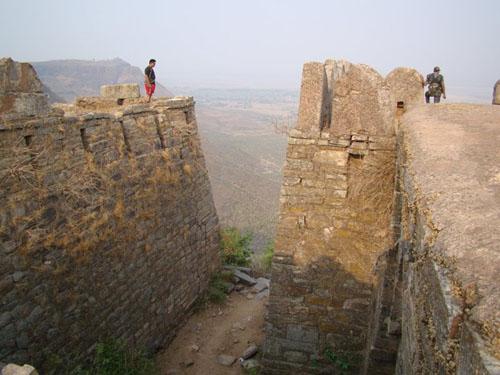
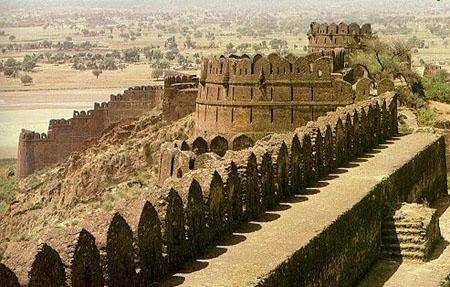
The altitude of the fort is 1500 feet above the sea level and the fort sits on top of a plateau. In order to reach the temple from the foothills to the summit, there are as many as 2000 number of steps cut from limestone. The first gate of the fort is located at the point where the steps end. The distance between the fort and the first gate is a mere 2 Kms. This fort can be considered a fine specimen of the Mughal style of architecture. The fort, which is considered to be one of the biggest and powerful forts of India, is now standing in a state of demolition.
One can find the Rohtas Fort’s history to be quite intriguing and length as well. One cannot exactly trace back the point where the fort initially came into existence; however some of the initial present memorials trace the history of the fort to the 7th century king named Sashanka.
Prithviraj Chauhan took over this fort during the medieval time period. Nevertheless, when Sher Shah Suri took over the fort during the year 1539, which was the point when the fort rose to importance and distinction. The fort was protected by an army of 1000 men during the rule of Sher Shah. Haibat Khan, who was Sher Shah’s soldier, constructed a Jama Masjid within the fort grounds.
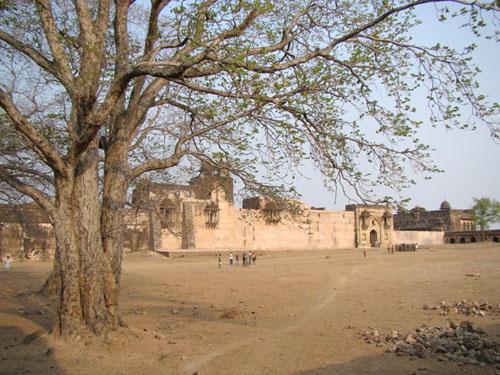
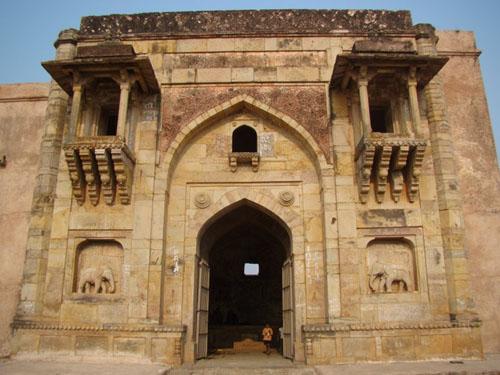
During the year 1588, the general of Akbar named Man Singh took over the charge of the fort. Takhte Badshahi is the name of the palace that was constructed by Man Singh within the fort grounds for himself. Apart from his palace, another palace named Aina Mahal was constructed by him for his principal wife and also the chief gate of the fort named Hathiya Pol.
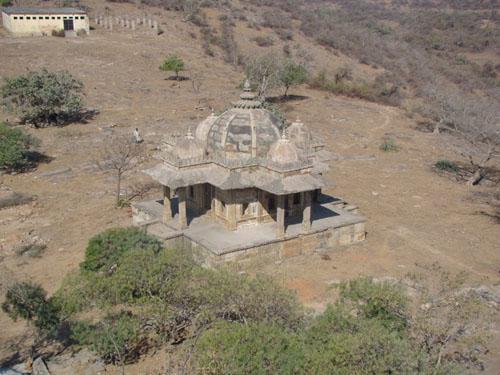
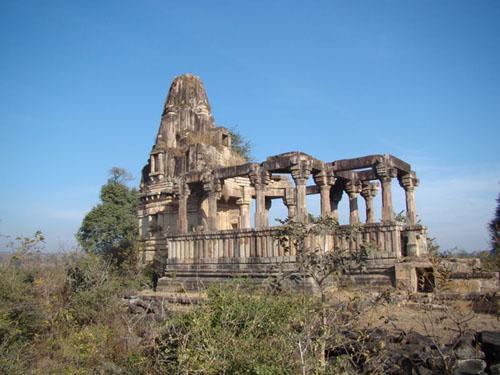
Outside the palace premises, numerous other architectural specimens are present such as the Jama Masjid, Mausoleum of Habsh Khan and Sufi Sultan’s Makbara. Constructed in a Rajputana design, the Ganesh Temple is situated in the west direction of the Palace of Man Singh, at a distance of 0.5 Kms.
The major part of the fort was demolished and shattered by the British forces after the Battle of Buxar. The fort is situated in a very tactical spot, from the military point of view. This is because of the fact that the fort sits on the summit of hills with steep sides.
OTHER PLACES OF ATTRACTION
Takhte Badshahi
Aina Mahal
Jama Masjid
Ganesh temple
HOW TO REACH ROHTASGARH FORT
By air: The nearest airport is located in Gaya, at a distance of 117 Kms away.
By rail: Some of the closer railway stations are Mughal Sarai Junction, Narenagar Road and Ankorah Akorah.